
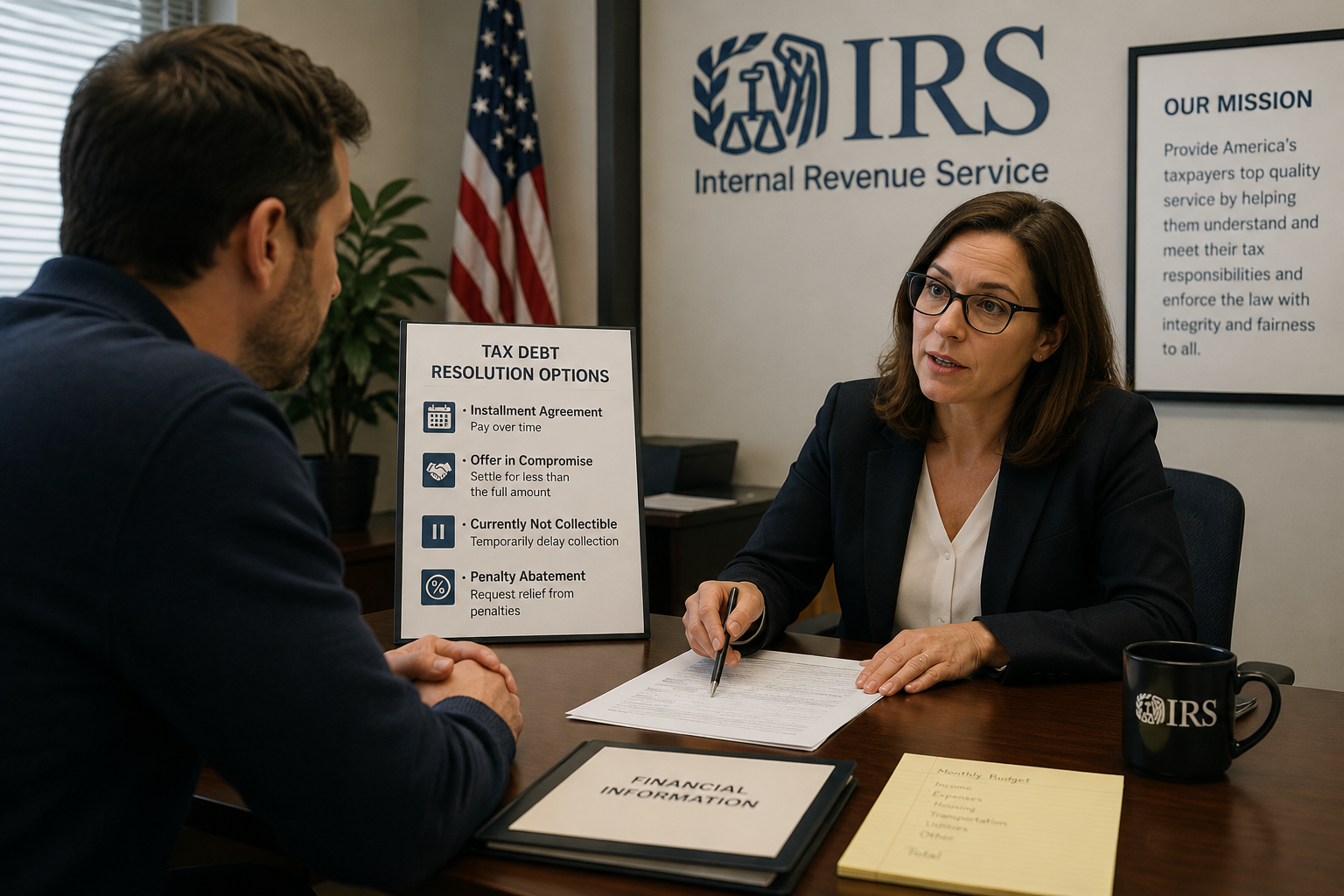

Negotiating with the IRS is one of the most misunderstood processes in the tax world. When individuals or businesses owe back taxes, they often assume the IRS will make the path to resolution straightforward. In reality, tax debt negotiations involve a mix of legal procedures, financial analysis, and strategic communication that can quickly become overwhelming without professional guidance.
Understanding the IRS Mindset
The IRS approaches every tax debt with one central goal: collect as much of the outstanding balance as legally possible. This shapes how agents evaluate:
- A taxpayer’s financial capacity
- Asset values and equity
- Business viability and cash flow
- Taxpayer compliance history
Because of this, IRS negotiations are not emotional or sympathetic. They are financial, procedural, and evidence-based.
Documentation Is the Foundation
When pursuing options such as an Offer in Compromise, installment agreement, or penalty abatement, taxpayers must provide detailed financial documentation. This may include bank statements, profit-and-loss reports, household bills, asset statements, loan documents, and business records. Missing or incomplete documentation can stall or weaken a case.
One of the most common challenges taxpayers face is understanding how the IRS calculates “reasonable collection potential,” a formula that influences whether an offer will be accepted. This calculation does not always reflect what taxpayers feel they can afford, which is why professional preparation is critical.
Compliance Is Non‑Negotiable
A taxpayer cannot negotiate while falling behind on current obligations. The IRS requires:
- All current tax returns filed
- Current year estimated payments or withholdings correct
- Proper business filings and deposits
Many taxpayers unintentionally sabotage their negotiations by focusing only on past debt without meeting current compliance requirements.
The Strategic Side of Communication
IRS negotiation involves more than submitting forms. It often requires:
- Responding quickly and accurately to IRS requests
- Positioning financial hardships with proper documentation
- Anticipating questions about income, expenses, or assets
- Understanding deadlines, appeal rights, and case timelines
A well-prepared representative can often prevent cases from escalating to liens, levies, or garnishments simply by managing communication effectively.
Why Professional Representation Matters
Tax professionals understand IRS procedures, financial analysis, and negotiation strategies that the average taxpayer does not. With high stakes, strict rules, and significant financial consequences, expert guidance can lead to faster resolutions and better financial outcomes.
If you have questions about a tax audit or unresolved tax debt, please contact us today,