
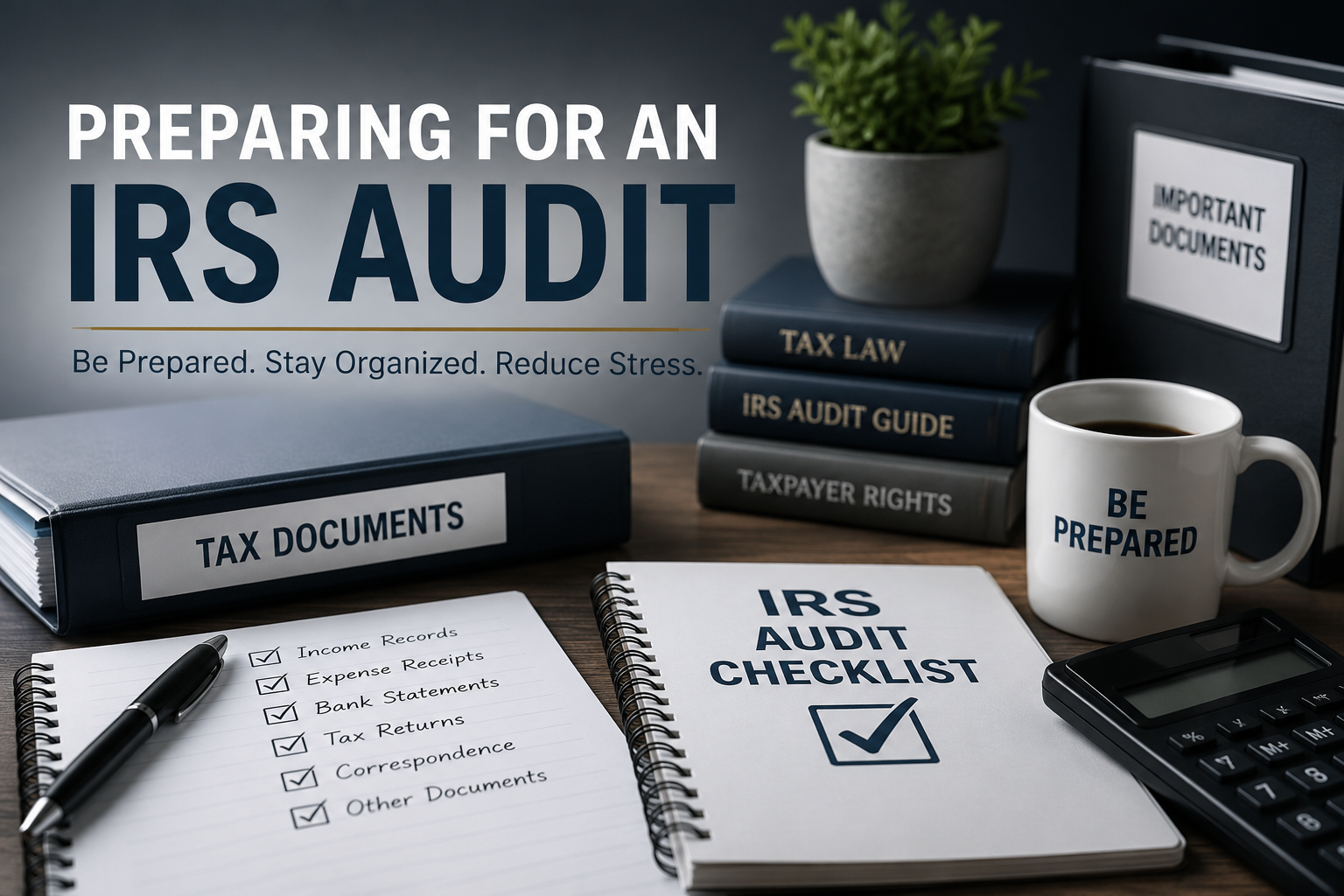

Preparing for an IRS Audit: What to Expect and How to Stay in Control
Receiving a notice from the IRS can immediately raise stress levels, especially when the word “audit” is involved. However, an audit does not have to be a negative or overwhelming experience. With the right preparation and a clear understanding of the process, you can approach it with confidence and control.
Understanding the Types of IRS Audits
Not all audits are created equal. The IRS generally conducts three types of audits, and knowing which one you are facing will help you prepare effectively.
A correspondence audit is the most common and is handled entirely by mail. These audits usually focus on specific items such as missing documentation or discrepancies between reported income and third-party records.
An office audit requires you to visit an IRS office and provide documentation in person. These tend to involve more detail than correspondence audits.
A field audit is the most comprehensive and takes place at your home, place of business, or your representative’s office. These audits are typically reserved for more complex financial situations.
Understanding the scope of your audit is the first step in determining how to respond.
What to Do When You Receive an Audit Notice
The most important step is to carefully read the notice you receive. The IRS will clearly outline what they are reviewing and what documentation they need from you.
It is important not to panic. An audit is not an automatic accusation of wrongdoing. In many cases, the IRS is simply verifying information or requesting clarification.
Pay close attention to deadlines and instructions. Responding promptly is essential to avoiding additional penalties or complications.
Organizing Your Documentation
Preparation is the foundation of a successful audit outcome. Begin by gathering all relevant documents, including income records such as W-2s and 1099s, receipts for deductions, prior tax returns, and any supporting documentation for credits or claims.
Organization matters. Arrange your documents in a clear, logical order that directly corresponds to the items being reviewed. This not only makes the process smoother but also demonstrates credibility and cooperation.
It is also important to provide only what is requested. While transparency is important, over-sharing can lead to unnecessary scrutiny in areas that were not originally under review.
Knowing Your Rights as a Taxpayer
Many taxpayers are unaware that they have clearly defined rights during an audit. The IRS outlines these in the Taxpayer Bill of Rights, which includes the right to be informed, the right to challenge the IRS’s position, and the right to retain representation.
Understanding these rights can significantly reduce anxiety and help you make informed decisions throughout the process.
When to Seek Professional Help
While some audits are straightforward, others can become complex quickly. If your audit involves multiple issues, large sums, or business-related matters, working with a qualified tax professional is a smart move.
A CPA, enrolled agent, or tax attorney can communicate directly with the IRS on your behalf, ensure your documentation is properly presented, and help protect your interests throughout the process.
Possible Outcomes of an Audit
Not all audits result in additional taxes owed. In fact, many audits are resolved with no changes once proper documentation is provided.
If the IRS does propose adjustments, you have options. You can agree, request further clarification, or appeal the findings if you believe they are incorrect.
The key is to stay engaged and informed throughout the process.
Staying Prepared Year-Round
The best way to handle an audit is to be prepared long before one ever happens. Maintaining accurate records, keeping receipts organized, and reviewing your tax filings regularly can significantly reduce your risk and stress.
Good recordkeeping is not just about compliance—it is about confidence and control over your financial life.
Take the Next Step
If you want to reduce your audit risk or feel confident in your ability to respond if one arises, now is the time to act. Whether you need help organizing your records, reviewing past filings, or preparing for a potential audit, professional guidance can make all the difference.
Contact us today if you have received an IRS audit notice or have questions about an IRS audit.
:::